Create the “Write” Habit

I’ve been a teacher for 18 years and have found the topic of writing is a touchy one for many. After all, writing is a craft and many feel defeated when they’re asked to initiate the process, independently. Writing prompts are helpful but sometimes folks still get stuck finding the words to create a coherent piece.

Still, I believe that writing can be a cathartic release. Topics for writing should be fun and positive so that you can stick with it and make a great habit of it. Writing a simple poem or jotting down gratitude statements are an easy way to start.

Journal writing is very popular. I have countless journals that span over several topics of interest. I have a gardening journal, a study journal, a habits journal, a dream journal; the list goes on. Writing has always helped me process and comprehend things much better. It also helps you gain perspective and inspiration as you become better at it.

Now that we all have a bit more time on our hands, starting a daily journal could be a fun activity to fill in time. You don’t have to write long dissertation, it can just be a little blurb or inspirational quote that can help raise your frequency and bring you to present moment awareness.

A good rule of thumb to begin your journal entry is to use your imagination. Your imagination is a wonderful tool to create an interesting and fun piece of writing. As a child, I had a wild imagination. I loved dreaming of fantasy worlds where animals conversed with humans or you could hitch a ride on a bird’s back. I often hid away in tree tops to write fantastical poems and short stories to bring me to such wonderful places.

Don’t know where to start? How about a prompt?

Imagine that a wild animal or perhaps your pet suddenly began to speak. What kind of conversation would it have with you? Write a simple conversation down in your journal. Imagine that you’re face-to-face with the animal and that it has a wonderful tale to tell you about a happy life.

For those of you who find that writing doesn’t come easily, here’s an accommodation. Make a video of you and the animal of choice having a conversation. I would love to see what you come up with. Remember, the challenge is to keep it short. I encourage you to post your entry or video on my Facebook page. Click on the button below.

What Is My Purpose?

This is the buzz question/topic of the year. I’ve personally read countless articles and books that help people define their life purpose. I’d like to share my experiences regarding this question, as it came up for me a few years ago, and I’ve figured out my answer to this seemingly perplexing question.

I remember the day that this question poked me on the shoulder. It was back in 2014 when I was going through a difficult time in my life. I thought to myself, “What is my purpose?” Then I started to panic because I couldn’t figure it out. I kept pondering the question. I got emotional about it. Then I thought, “Oh, my God…I don’t have a purpose and time is running out!”

Every day, I’d contemplated the question and heard the little voice inside my head say, “You still don’t know what the hell you’re doing here. What is your purpose?” Honestly, I still didn’t know. I’d self-talk my way through it: “Maybe you shouldn’t call it a purpose, maybe you should call it your passion. Yes! That’s it, “What is my passion?”

(Further down the rabbit hole) My reply to self, “I don’t have a passion.” Panic! “Oh, my God…I don’t have a passion, either. Time is running out. What the hell am I doing here?” (The voice got worse) “I don’t belong here. There’s something wrong with me. I don’t have a purpose or a passion.”

Now what?

Then, I read something that struck a nerve. It was from an old book titled, “What Makes a Master?” by Harriet Luella McCollum. I can’t remember the exact wording, but it was something like this; if you don’t know your purpose/passion, then bring attention to whatever it is you’re doing right now and do it with the best effort possible–regardless if you like it or not.

So, I did that. I put in wholehearted effort into whatever it was I was doing at that moment without complaining. While this did feel more fulfilling, I still felt irritated that I couldn’t yet define my purpose.

Then I had an epiphany. What I thought was a natural part of my existence was actually my true purpose and passion in life; understanding human consciousness. Don’t get me wrong. I was never involved in any formal studies about consciousness. It’s been a topic of interest that I’ve consistently studied over the years.

I found that every idea, decision, question, I make is through the filter of consciousness. I take to heart my actions and how they may affect myself and others. In other words, I ponder, “How do my ideas, decisions, and question serve others?” I believe that being conscious of our actions, our relationships, our Earth, our “Now,” is a life long spiritual practice; one that needs attention and nurturing every day.

Therefore, my purpose and passion is to be conscious. If you don’t know what your purpose is, wouldn’t consciousness be a great place to start? To be conscious of our every breath, all our blessings, of being aware of the significance of right here and right now. I think, so.

I will end with a quote from his book, “A New Earth,” by Eckhart Tolle.

Your inner purpose is to awaken. It is as simple as that. You share that purpose with every other person on the planet – because it is the purpose of humanity.”

“Perception is Tricky”

The following piece is an excerpt from my book, “Word, From Your Mother,” a daily guidance journal written for my children, Liv and Pierce-Gabriel.

Excerpt #3

Perception is tricky. Everyone can perceive a situation, an idea, or a story, differently. Based on our perceptions and thoughts, we form opinions. Then, opinions often become judgments and then judgments become beliefs.

Have you heard of the statement, “If you can dream it, you can believe it; if you believe it, you can become it.” Really pick this one apart. Whatever our beliefs are, no matter positive or negative, they eventually materialize. That little dream or belief is “put out there” into the cosmos; into the world of form and it “becomes.” How amazing.

It is so important to have positive thoughts and beliefs, even through adversity. This doesn’t mean that you resist or deny what is. You acknowledge the thoughts and let them flow like a river without resistance—without judging them as good or bad.

The key is this: As long as you don’t attach to your thoughts or beliefs and as long as you can separate your situation from your judgment of a situation; you are free. In other words, allow things to unfold naturally. Trying to insert your “preferences” inhibits the natural flow of events, which in my opinion, have already been predetermined.

I always looked at this, (when I was your age) as the blueprint that Source has handed me. As an adult, I now recognize that I had a hand in the creation of my blueprint on Earth, before landing here.  And, while on Earth, I’ve been given free will choice which often alters my blueprint as I’m building my life.

So, what are you building? What are you manifesting? I often reflect upon those questions, especially when “little me,” as Eckhardt Tolle refers to, creeps in, to interject its negative commentary.

Here’s a good pointer: Never let your happiness depend on your perception of a situation. For example, when I was little I often felt left out. I was the one who was chosen last when picking out a team member. My perception was that I was weird and different. I believed this all the way through high school. I believed that I wasn’t popular because I was weird and different. It wasn’t until I was a young adult that learned to unwind the subconscious, “recording” that kept reeling in my head throughout my life.

I remember changing the recording to: “I like being weird and different…it sets me apart from the ordinary.” Changing that thought opened so many doors in my life. I felt free to be myself. I didn’t mind what other people thought about me. That was their issue, not mine.

The allowance and acceptance of self and non-attachment of all perceptions, preferences, opinions, judgments and beliefs is what awakens us. Awakening to the simple fact that we are so much more than who we believe we are. Remember, you are the creator of your reality.

Resetting Routines through Awareness

Now that we’ve all been home for a few weeks, I’ve been rearranging my schedule and routine to add more awareness practice to it. Many of us have found the adjustment to working at home to be quite difficult. After all, when we typically get home from work, we release the tensions of the day and feel the comfort of home as though a welcoming hug.

Everything seems to be blending, now. Sometimes I feel as though I’m not really leaving work because I see my computer, my extra table, my books and binders, right in my place of peace. In other words, I’m finding it difficult to walk away from it all.

We all know the saying, “Out of sight, out of mind.” One of the first things I do when my work day is completed, is stow away all my work related materials. In a previous article I demonstrated a way to organize books and materials so that your work station isn’t cluttered. Visually, I need to put everything away so I don’t get distracted once the work day has ended.

As a replacement, I pull out something desirable and put it on my desk as a healthier distraction. For example, I’ve been reading books on grant writing and photography. So, I set those books on my work station or I’ll put a drawing pad or canvas there as my replacement activity. So, if regular work “thoughts” try to distract me, I have a different visual distraction.

I’ve also incorporated another awareness exercise that has helped with the stress of working at home for myself and my family. This is an exercise I learned from Thich Nhat Hanh in his book, The Art of Living. Simply, find a bell or use the alarm on your phone and set to ring it about every half hour or so. In doing so, everyone should simply stop what they’re doing and: take three refreshing breaths, bless a friend or family member, or express gratitude for something in your life. This brings you to the present moment (which is all we really have), and reminds you that there is much more to life than work.

Centering exercises are a good practice and should be part of a daily routine more than once a day. There are many ways that can help center one to awareness. I need to move often, as I find serenity in movement breaks and breathing the outside air. Sitting or walking through the woods is an excellent centering exercise. I know this may sound cliche but hugging or leaning against a tree is a magnificent way to bond with nature and center your being.

Many experts call these types of exercises as “mindfulness practices.” I prefer not to use the the word mindful as it connotes having a full mind. Right now, it is best to release our full minds of all the commentary and negative stuff and replace it with “no-thing.” Right–nothing. In other words, empty the mind of spinning thoughts and replace it with the awareness of breath and the consciousness of the present moment and all it has to offer.

We often take the present moment for granted. Many are able to verbalize the present moment, “It is what it is,” but they don’t truly surrender to the feelings associated with it. Awareness practices are abundant. We can relax through music and various teachings. “Let it be,” is a fantastic mantra for present moment awareness.

So, when and how often do we incorporate consciousness exercises or awareness practices into our daily routine? I say, as much as possible, all day, every day with focus and intention. How do you focus with intention? Through breathing and recognizing the power of intentional breathing.

Our mind and body gives us many indicators of the need to shift focus and take a breather. As I sit at my work station toiling over a work issue, I can physically feel pain creeping into my lower back or a headache coming on. This is your body calling out that something isn’t right and needs your attention. This is when acknowledgement is important.

Ring the bell, get up and walk around, go outside and breathe. It doesn’t take long and the benefits are amazing. You’ll begin to feel energy move through your body with automaticity. I’ll leave you with a quote from the book, Breathing as Spiritual Practice by Will Johnson:

“A breath of love is entirely different from a breath of anger or fear. It’s full. It’s relaxed, It’s gentle. It’s deep. It radiates warmth and caring, an understanding that everything is connected.”

Primo Pasta Salad

I consider my family of four to be hardy eaters, however, we never seem to get through a full pound of pasta at dinnertime. This can be attributed to the large antipasto salad and lots of delicious Italian bread prior to our meal!

So, what can you do with the leftover pasta to “upcycle” it? Make a delicious pasta salad, of course. You can do this with any pasta, even linguine, spaghetti or fettuccine. Just chop it up and throw in some delicious add-ons.

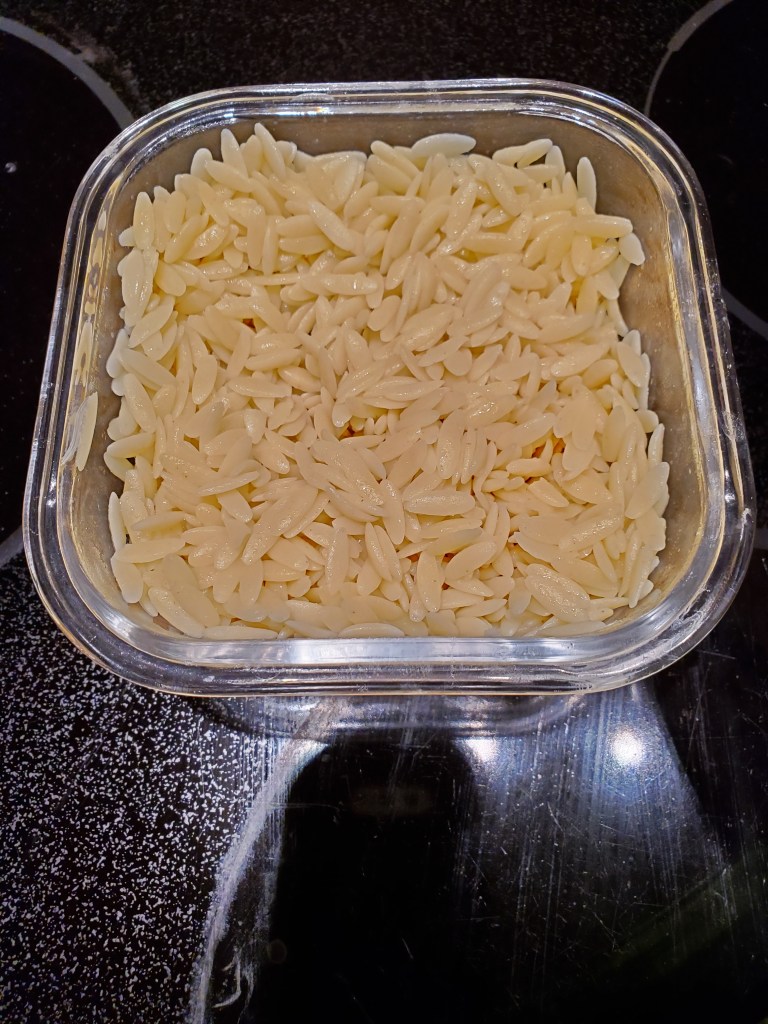
I had some leftover orzo pasta from chicken soup last week. My daughter was hankering for a salad with feta cheese, so, instead of chopping up lettuce, I used the leftover orzo. There’s nothing to it besides adding healthy vegetables, beans, and cheeses to your pasta.

Garnish with fresh or dried herbs and your favorite dressing. Add salt and pepper to taste. I prefer Himalayan salt and cracked pepper. Sprinkle a bit of Parmigiano or Romano cheese for added flavor.

Steps:

1. Grab your leftover pasta and put it in a strainer. Run cool water over it to break it up. If you have linguine, spaghetti, or fettuccine, chop it up into smaller bites.

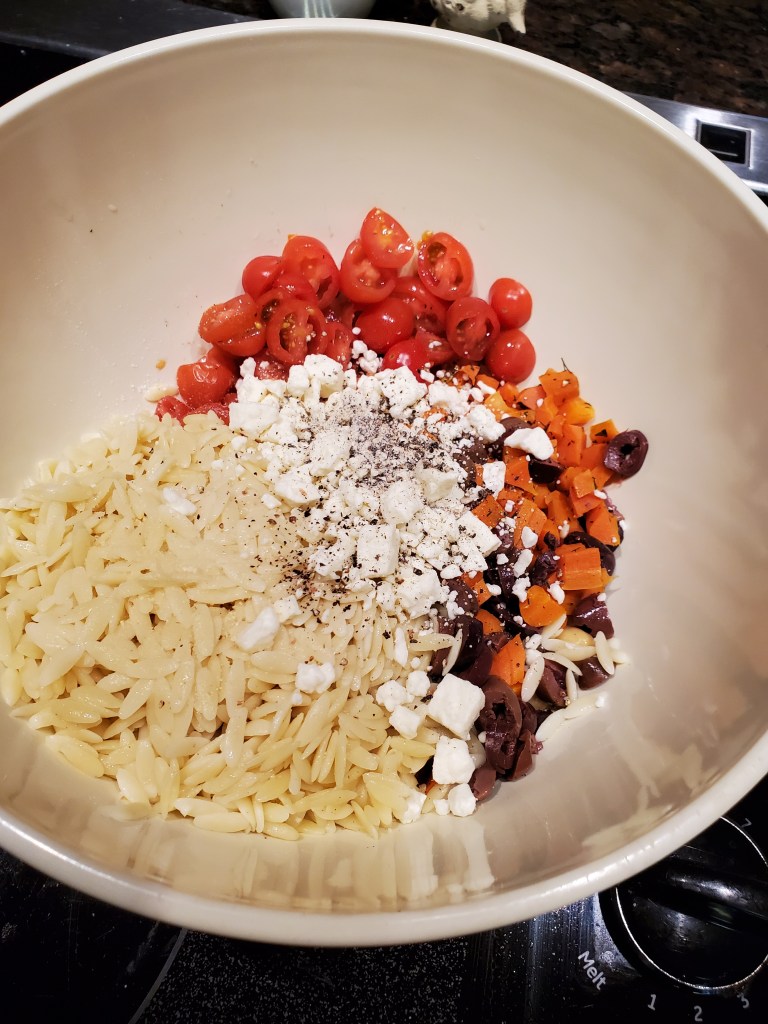
2. Add your fresh or leftover veggies and beans. You can add tomato, carrot, celery, beans, olives, etc. Strained kernel corn adds delicious sweetness.

3. Add your cheeses and herbs. Try feta, blue cheese, mozzarella, shredded or cubed cheddar, monterey jack, or colby jack. Sprinkle your favorite herbs such as oregano, basil, parsley. Fresh herbs are even better.

4. Mix with EVO and a dash of rice vinegar or your favorite dressing. Add salt and pepper to taste. Enjoy!

How to Keep An Even Mind

The following piece is an excerpt from my book, “Word, From Your Mother,” a daily guidance journal written for my children, Liv and Pierce-Gabriel.

Excerpt #2

I was reflecting upon the moral letters to Lucilius from the Stoic philosopher, Seneca. In those letters, Seneca gives advice to Lucilius regarding life. Here’s one of his quotes: “There are more things, Lucilius, that frighten us than injure us, and we suffer more in imagination than in reality.” In other words, we make a lot of scary stories in our head and believe them to be true, when in reality, things aren’t really so bad.

Today, there are great spiritual teachers who help point us in the right direction regarding our racing thoughts, overactive imaginations, and how to get them under “surveillance.” Being aware of our thoughts is the first step to being conscious.

I’ve expressed many times that your thoughts create your reality. You can look at this objectively (from a scientific perspective) or subjectively. Quantum physics can give you a good idea of how this works on a molecular level. However, it’s the immaterial perspective that provides a more spiritual directive. I choose the latter because of my feelings towards a higher power. There are some phenomena that science can’t explain. We interpret this in our language as miracles.

Getting back to thoughts, I feel it is very important to keep an even mind. This is why I’ve told you and your brother to steer away from anything that promotes low energy such as violence on T.V. or movies that conjure negative thinking. Social media is another one. There is a lot of brainwashing going on out there. We must rise above it and be the ones who foster positive, right thinking.

How can you do this? Well, let’s refer to Hermetic philosophy. If you read this ancient philosophy, you’ll learn what transmutation is. Back in the day, the mystics were able to transmute base metals into gold. With conscious awareness, you learn to transmute negative thoughts to positive ones. This is how one manifests the good things in life.

Say the ego plants a negative thought in your head. Eventually, that thought may become a belief, stored in your subconscious mind. The subconscious mind is like a tape recorder that will “turn on” when you’re experiencing something in context.

For example, say you witnessed someone reacting to a mouse in their house. They totally freak out, scream, throw a huge fit, and run out of the house. You may store this experience in your subconscious mind as mice are bad and scary. So, every time you see a mouse, you freak out and have a similar reaction.

How can you transmute this fear? Sometimes, we learn to transmute our thoughts by observing others’ behaviors. For example, you might go to a friend’s house and observe her playing with a pet mouse; feeding it, loving it, and encouraging you to pet it. Then, you hold the little mouse and feel it’s little vibrating body in your hands. It is soft and silky to the touch and your thoughts about mice change. You are no longer afraid.

This is an example of transmutation, however, we are usually dealing with more difficult thoughts and beliefs that need to be transmuted. The most important thing is to be consciously aware of your thoughts so that you can make positive changes.

One of the ways to do this, is to ask yourself, “What am I manifesting?” In other words, what thought/belief am I creating? Also, take note of the commentary that goes on in your own mind. Does it serve you and/or others in a positive way? Is it good, bad, or ugly?

In my opinion, self-destructive thought is the most difficult to transmute. Here’s are some examples: “I’m not smart enough.” Or, “I’m fat and ugly.” How can you transmute these thoughts? The most effective thing to do is to create a “better feeling thought” to replace the old one. It’s as easy as that. For example, “I have many gifts that help others” or “I enjoy walking which makes my body strong.”

Visualization is another way you can transmute a thought. By seeing and feeling the desired result prior to its fruition, helps to create that reality. For example, visualize that there’s a good grade on your paper instead of thinking, “I’m not smart enough.” Visualize that you have a strong body that carries you everywhere. Feel the sensation that a strong body has. Believe that you already have it. This is how you change your reality.

I must admit, visualization doesn’t always work for me. I’ve tried many times but found that my focus tends to be towards material desires (like a new kitchen). This doesn’t fulfill my heart because I’m turning towards the external environment for happiness. I find that it’s more authentic to desire something simpler, like peace in my heart.

Another effective way to transmute your thoughts is to write things down. You can write down the negative thought in one column and rewrite it as a positive one in the other. For example: “I feel anxious and worried all the the time;” change that to, “Wouldn’t it be nice to have the feeling of inner peace; inner peace provides me with the feeling of being free and happy; inner peace feels satisfying and lovely; I can foster this inner peace and share it with others; wouldn’t it be lovely to share peace with all of those I encounter.” The result is a nice “rampage” of the desired feelings which replaces the negative thoughts, thereby changing your reality.

Cleaning up one’s frequency is key to keeping an even mind and the first step is awareness of your thoughts. If you can be the bystander of your thoughts, then you are experiencing consciousness. Try to catch yourself when you have a negative thought. Don’t judge the thought, observe it. Then, try to transmute it. It is a practice worth trying as it will transform your life in many ways. Give it a go.


Give Spring Cleaning, Meaning!

I’m sure many of us have already started tidying up since we’ve been home. Cleaning house is not a favorite among many of us, however, we can fill in time during the day by doing some simple chores to beautify our home and get organized!

Living in New England can be challenging in terms of turning over from one season to another. Where I’m from, we really don’t call it spring–it’s more like, “Mud Season.” Things get pretty messy between the kids and the dogs traipsing around from room to room with dirty feet and paws.

I ache when my friend’s from the south and the west send pictures of sunny skies and warm temperatures, although, they still have some complaint about cleaning and organizing with their slighter changes in season. There’s big tasks like preparing the pool, replacing turf and getting rid of stuff you don’t need (as most warmer places don’t have attics or basements).

To give your spring cleaning meaning, try this. With every task you do, add a bit of consciousness to it. In other words, do it without complaint. Find some joy in it. For example, when I’m scrubbing the dog (yes, this is part of my spring cleaning regimen), I put out the energy of loving care towards her. If I’m cleaning the dishes, I become grateful and aware of the precious, warm and clean water I have the luxury of cleaning with. We take so much for granted! My grandmother always said, “With everything you do, do it with great joy and gratification, even if you don’t feel like doing it.” This expression of appreciation goes a long way. It will bring happiness to your heart and to others.

Here’s a list of not-so-obvious spring cleaning tasks that are often overlooked. Don’t try to do everything at once. Spread it out. Some tasks should be done more often than others just for the sake of hygiene. Many of the suggestions will apply to New England folks, home owners and families with kids, however, feel free to improvise!

  • Wash all hats, mittens, scarves and bury them until next fall
  • Rewrite your recipe cards (for those of us who are still old-fashioned)
  • Unsubscribe to stuff you don’t want on email
  • Clean out digital photo files
  • Wash the dog
  • Renew dog licenses
  • Vacuum your window sills
  • Wash window screens
  • Rearrange your knick knacks
  • Clean your microwave (a lot)
  • Organize your books
  • Organize your DVD’s and CD’s
  • Prune your indoor and outdoor plants
  • Wash your curtains
  • Clean door knobs/handles
  • Clean light switch panels
  • Dust the top of all doors
  • Clean out clothes and donate
  • Get rid of unused/unwanted toys
  • Recycle old magazines
  • Clean out the dryer vent house
  • Change smoke detector batteries
  • Vacuum your car
  • Wash house windows
  • Clean out your pantry
  • Organize your shop/tool area
  • Clean mower decks
  • Change oil in lawn care machines
  • Replace weed wacker string
  • Buy new pillows
  • Replace your toothbrush (a lot)
  • Replace your house filter
  • Clean your furnace
  • Rake landscape and mulch
  • Prepare your garden (till and weed block)
  • Fill birdseed feeders/humming bird feeder
  • Chimney sweep
  • Check irrigation system
  • Check all outdoor faucets for leaks
  • Organize your file cabinets
  • Complete your taxes
  • Dust and clean miniblinds

Lit Leftovers

Reinventing the calzone is easy with leftovers. I’m not one to make my own dough for pizza and calzones. I take the easy way out and buy my dough pre-made at the grocery store. A pound of frozen or fresh dough usually costs under a couple of bucks. It’s a great staple to have on hand when you want to make a quick pizza, hand pies or calzones.

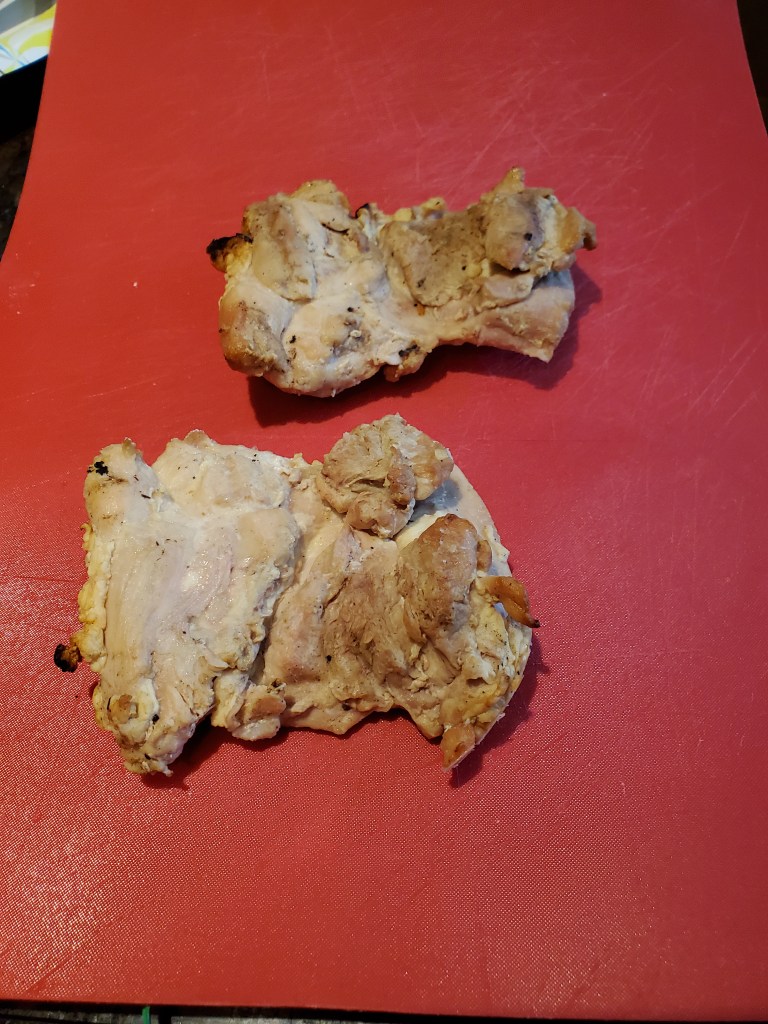
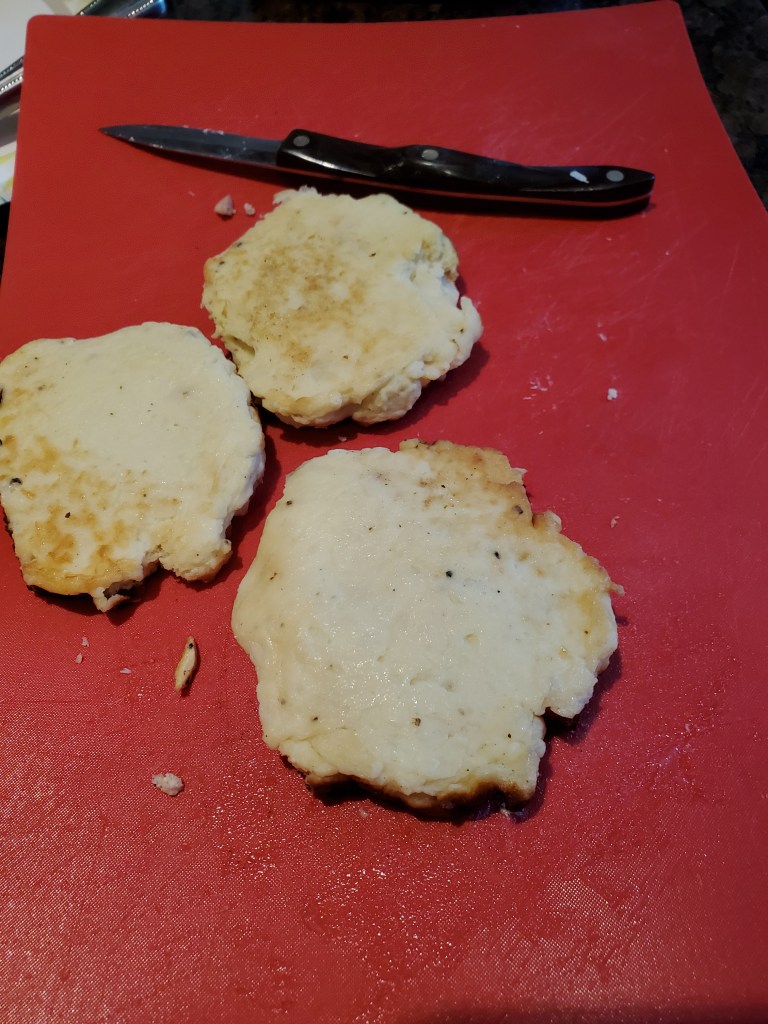
Here’s what I did the other night to use up some leftovers in the fridge. I had two leftover grilled chicken thighs, 3 leftover latkes (potato cakes) which were also upcycled leftovers from mashed potatoes, and a half bag of shredded mozzarella cheese (about 4 oz).

Preheat your oven to 350-360 degrees.

Prepare your baking sheet by spraying it with avocado oil or a light coating of olive oil.

Thaw your dough or if it’s fresh, roll it out on a floured surface. I always use the ceramic stove top because it’s easier to clean. Chop up your leftover meat into cubes. Cut up your veggies if they’re dense, into cubes. If you’re using a leftover baked potato, remove the skin, first.

Don’t add an uncooked potato into your calzone! It’s best to microwave until fully cooked if you wish to add potato. You can add fresh spinach. In fact, my family’s favorite calzone is spinach, potato and roasted garlic.

Other cooked leftover ingredients you might like: steak, pork, chicken breast, meatball. You can drizzle barbeque sauce or leftover tomato sauce on top of the meat before you top with cheese.

Delicious leftover veggies: broccoli, carrot, breaded eggplant, onion, roasted garlic

When your ingredients are chopped and prepared, put them all to one side of the dough. Drizzle or dollop your favorite sauce on the main ingredients or you can drizzle some olive oil to keep your ingredients moist. Add herbs and salt and pepper to taste. Top with your favorite shredded cheese.

Fold the other half of the dough over your ingredients. Pinch and twist the dough around the edges making sure there are no gaps or holes for stuff to leak out. Lightly spray or baste the top of the pie with oil. Use a sharp knife to make 3-4 vent holes at the top of the pie.

Bake for 30-40 minutes or until the top is golden brown.

Enjoy!

“Lit” Leftovers

I don’t know about you guys, but I grew up being extremely aware of not wasting food. My sister and I were members of “the clean plate club” which earned us a star on the sticker board after each meal was completely polished off. And, if you didn’t eat every morsel on your plate, you were reminded of all the starving children in the world who were not as fortunate as you.

I’m convinced that growing up with this guilt/remorse mindset, I’ve managed to keep a few extra pounds on in my adulthood. To this day, I simply refuse to waste food. It’s an unconscious act. I’ve taught my kids how to make something out of the nothing in the fridge, hoping that they too, will mindful of waste and over consumption.

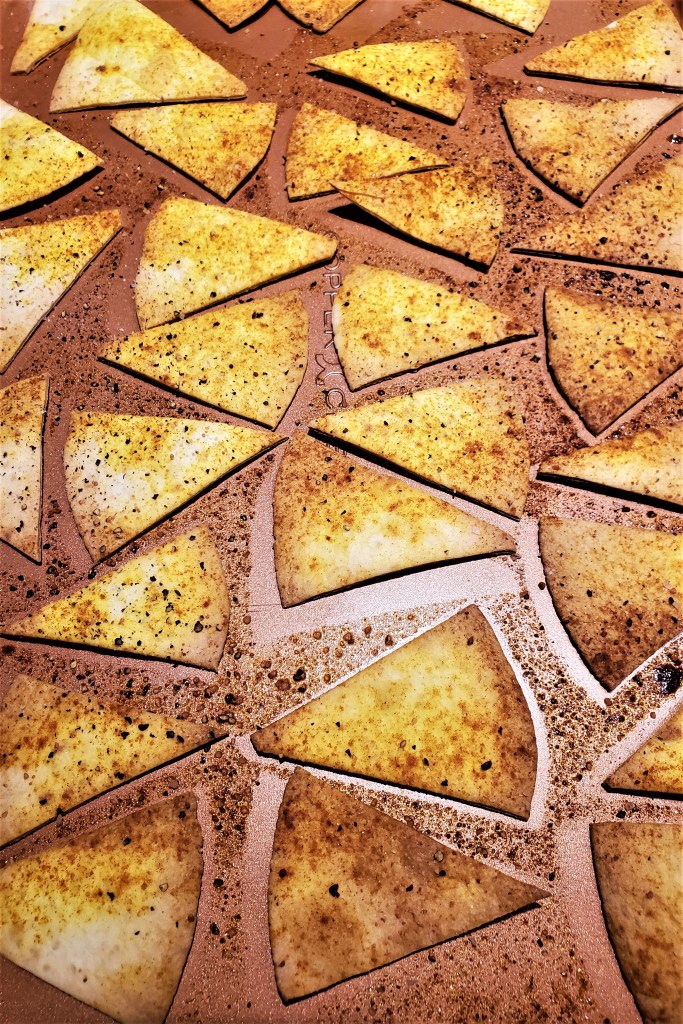
That being said, I’ve gotten pretty creative with leftovers. Below, is a creative way to use leftover soft tacos. With a box of 14 and a family of four, we always have at least 4 soft taco shells left over. Typically, we’ll use them the next day for breakfast burritos. However, I came up with an idea to use them for a snack–“burrito chips”.

Preheat your oven between 400-425 degrees

Use a pizza cuter to slice the burrito in to eight pie slices

Use a baking tray and spray with olive oil, avocado oil or any tasty oil (stay away from aerosol cooking sprays as they don’t add nutritional benefit or flavor, and they’re not good for the environment!)

Place the burrito pieces on the tray and spray with olive oil or other flavorful oil. Sprinkle your favorite spices on the chips (I like Himalayan salt, cracked pepper and turmeric but you can use just about anything)

Bake for 10-15 minutes or until golden brown

Let the chips cool and store in an airtight baggie or container

Enjoy!

How do I Meditate?

There’s so much information about “how to” meditate. I’ve read countless books and techniques. All of them have been great, truthfully. However, I believe there’s no one-size-fits all way to meditate. You have to practice what feels right to you.

I’m a pretty hyper person (in a good way). I have a busy and creative mind with lots of ideas spinning around. You can’t tell me to sit still for an hour let alone, 20 minutes. I’m just not wired that way.

For me, the best form of meditation comes in movement, especially if I’m feeling agitation or indecision. A nice brisk walk with a focus on deep breathing always does a world of good.

On the other hand, I have learned to establish a stillness routine. When I’m experiencing the feelings of tiredness or fatigue, often I still want to run around like a chicken. However, I’m aware that remaining in a constant state of motion with no down time wouldn’t serve me emotionally, mentally or physically.

In James Clear’s book, Atomic Habits: An Easy & Proven Way to Build Good Habits & Break Bad Ones, he describes that, “Rather than trying to do something amazing from the beginning, start small and gradually improve. Along the way, your willpower and motivation will increase, which will make it easier to stick to your habit for good.”

He recommends starting at 1% of your goal and increasing it each day by 1%. This is totally doable. For example, I’m trying to create the great habit of drinking an 8 oz. glass of water each morning. I’m terrible with being consistent about drinking those 8 ounces. So, I started with a sip each morning. I did this for a week. It’s about a month later and now I’m up to 4 ounces each morning.

If I had tried to go with the entire 8 oz. from the start, I’d fail. I’m just not a big drinker but I know that it’s very important to cleanse one’s organs upon rising. It’s also a good practice, in general. I tried this same technique with my meditation practice. I started with closing my eyes while sitting in a quiet space for one minute.

Even in that one minute, my brain wanted to interject, “Time for coffee!” or “You need to write that article by 7 a.m.” Ugh. It can be difficult! However, this should not stop you from trying something new to quiet your mind even if only for a few moments.

Here are some ways that I enjoy practicing meditation or what I prefer to call, quieting the mind. Think of the following as, “Minute to Win it Meditation Practices”

  1. Listen to birds
  2. Soak in a warm bath with Epsom salts or fragrant oil
  3. Lay in the grass with eyes open or closed
  4. Stare at the sky and moon
  5. Take a very slow walk with a focus on deep breathing
  6. Take a brisk walk with a focus on deep breathing
  7. Lock yourself in a bathroom and take 3 deep conscious breaths (I did this at work but now that we’re all home, I think this would work)
  8. Stare at your hands and see your mother’s, father’s, grandmother’s, grandfather’s hands
  9. Pick pine needles off a pine sprig and sniff
  10. Close your eyes at your desk for one minute and breathe
  11. Stare at a tree–every part of it without conceptualizing it
  12. Observe the stillness of your dog or cat.
  13. Observe your pet fish (you can learn a lot from fish)
  14. Flip a sand timer and watch the sand go down
  15. Sit in lotus position for a couple of minutes and breathe
  16. Put your phone on “do not disturb”
  17. Play with putty or sensory toy
  18. Sit in the woods -or-
  19. Make tent in your house with blankets and sit underneath it
  20. Focus on the flame of a candle
  21. Stretch your body
  22. Bless your food before eating it
  23. Close your eyes and express gratitude for one thing
  24. Close your eyes and bless someone you love
  25. Close your eyes and bless yourself
  26. Garden or plant something
  27. Knit
  28. Doodle
  29. Dance
  30. Sing a song or chant a mantra
  31. Drink a cup of herbal tea
  32. Send a message of love and appreciation to nature
  33. Send a message of love and appreciation to Source Energy
  34. Read something that is uplifting
  35. Pray
  36. Count to 100
  37. Sniff an essential oil such as lavender, vanilla or clove
  38. Observe your pet sleeping, mimic their breathing pattern
  39. Go for a bike ride around the block
  40. Go for a drive
  41. Walk barefooted outside
  42. Let the sun warm your face
  43. Jump through a sprinkler
  44. Draw or write a positive message with chalk on your driveway or side walk
  45. Pick up sticks in the yard